Context Engineering Certification: The Next Big Skill in Artificial Intelligence


 Locked


 
|
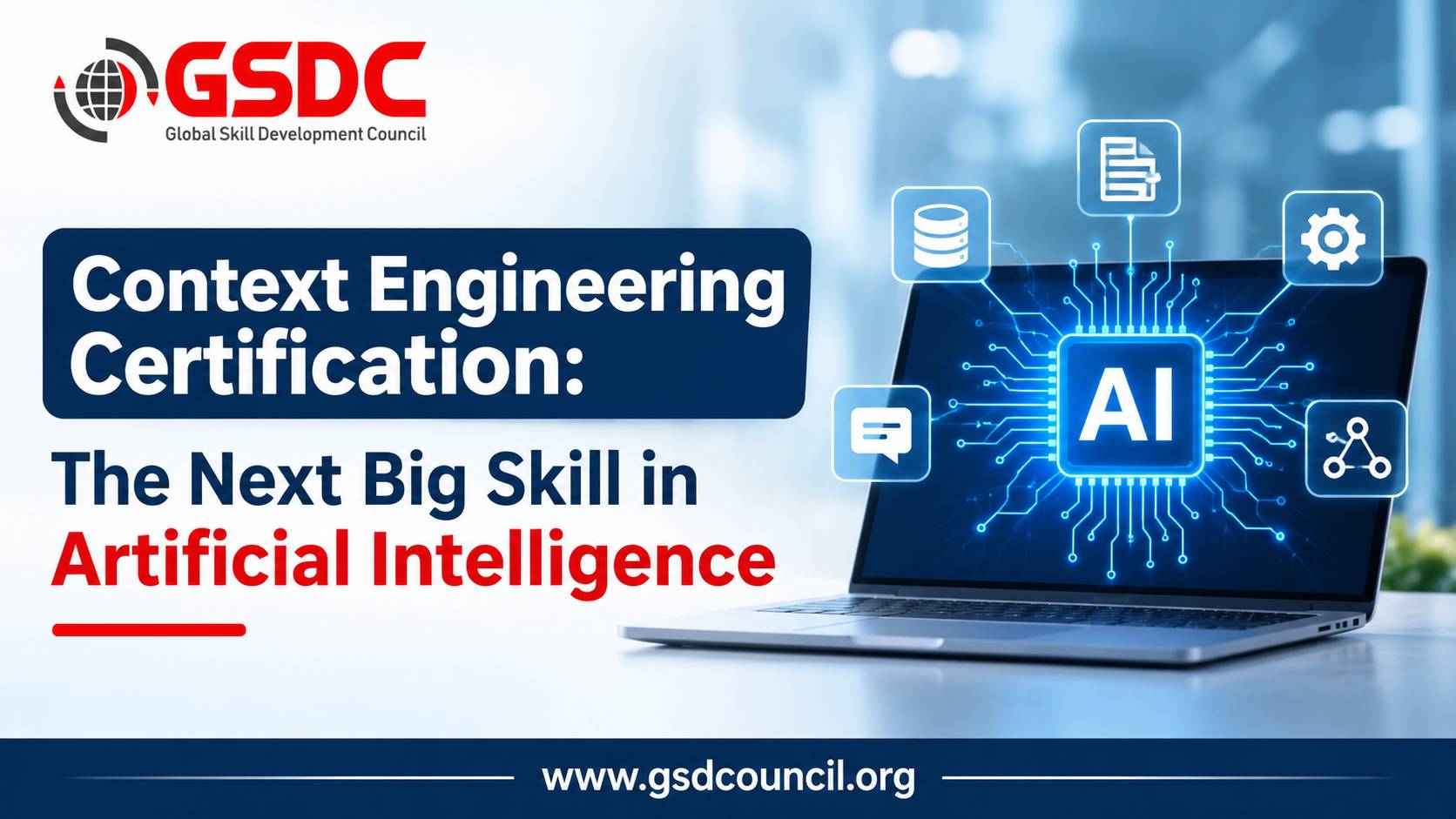 Introduction: Why Is Context Engineering Becoming Essential in AI? Artificial intelligence is evolving beyond basic prompt-based interactions towards intelligent, autonomous applications. As organizations increasingly adopt Large Language Models (LLMs), the ability to provide AI systems with relevant information, instructions, memory, and tools has become essential. This is where context engineering certification becomes valuable. What Key Skills Can You Gain Through Context Engineering Certification? A certified context engineer develops practical expertise in LLM context architecture, prompt-to-context design, Retrieval-Augmented Generation (RAG), vector databases, memory management, and AI agent orchestration. The learning also covers Model Context Protocol (MCP), context optimization, token management, security, and AI evaluation. A structured context engineering course helps professionals understand how to build reliable, context-aware AI applications for enterprise environments. What Are the Benefits of a Context Engineering Certificate? A professional context engineering certificate validates knowledge of modern AI system design. It helps professionals strengthen technical expertise, improve AI application development, understand enterprise automation, and demonstrate practical knowledge of context management. The context engineering certification online pathway also provides flexibility for professionals seeking to develop relevant AI engineering capabilities. What Career Opportunities Are Available After Certification? Professionals can explore opportunities as AI Engineers, Context Engineers, LLM Application Developers, Generative AI Specialists, RAG Engineers, and AI Solutions Architects. These roles involve developing intelligent applications, optimizing AI workflows, and integrating enterprise knowledge with language models. Market Demand and Industry Growth: Why Are Businesses Investing in Context Engineering? According to Stanford's 2026 AI Index, 88% of surveyed organizations reported using AI in at least one business function in 2025. Growing enterprise adoption increases the importance of reliable AI infrastructure and specialized engineering skills. Technology leaders such as Anthropic, IBM, and Snowflake are contributing to the development and understanding of context engineering practices. Why Choose GSDC's Context Engineering Certification? The GSDC program covers 14 learning modules, practical labs, RAG architecture, AI memory systems, security, and a capstone project. It also offers expert-led learning, SME sessions, examination opportunities, and job support. Future Trends: What Is Next for Context Engineering? Future developments will increasingly focus on agentic AI, dynamic context retrieval, multi-agent orchestration, secure AI memory, and efficient context optimization. These capabilities will remain important as enterprise AI applications become more sophisticated. Conclusion: Build Your Future in AI Engineering Context engineering is becoming an important discipline in modern AI development. Earning a context engineering certificate can help professionals strengthen their expertise and prepare for evolving AI engineering opportunities. https://www.gsdcouncil.org/context-engineering-certification #ContextEngineering #ContextEngineeringCertification #CertifiedContextEngineer #ContextEngineeringCourse #ContextEngineeringCertificate #AICertification #GenerativeAI #ArtificialIntelligence #LLM |
«
Return to Forum
|
1 view|%1 views
| Free forum by Nabble | Edit this page |