Rivers can look remarkably different even though they are all moving water.
Why does one river develop large bends while another divides into several channels?
The answer involves several geographical factors, including slope, sediment supply, erosion and the characteristics of the riverbanks. The Campus Review guide explains three major channel forms: straight, meandering and braided.
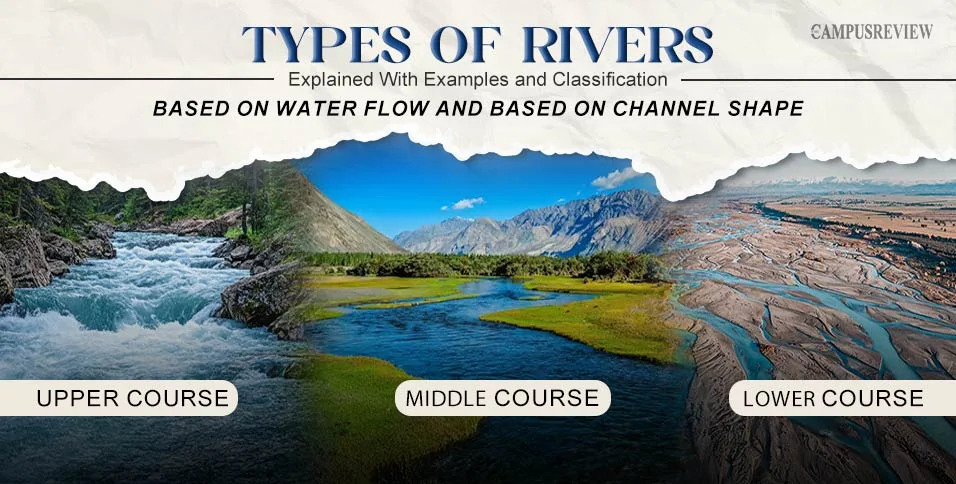
Flow behaviour also provides another way to classify rivers. Perennial rivers flow throughout the year, while intermittent and ephemeral rivers have more limited flow periods.
These classifications can help explain broader geographical processes.
For example, a meandering river can develop point bars, cutbanks and eventually oxbow lakes. A braided river develops multiple channels around sediment bars.
What river type do you find most interesting, and why?
Explore the complete explanation:
Types of Rivers Around the World
#Geography #RiverGeography #PhysicalGeography #Discussion


 Locked