Earth's layers differ in composition, physical state, temperature, and depth.
The crust is a relatively thin, solid outer layer. The mantle consists mainly of silicate rock that behaves as a solid over short periods but can flow slowly over geological timescales. The outer core is liquid and plays a central role in generating Earth's magnetic field. The inner core remains solid under immense pressure.
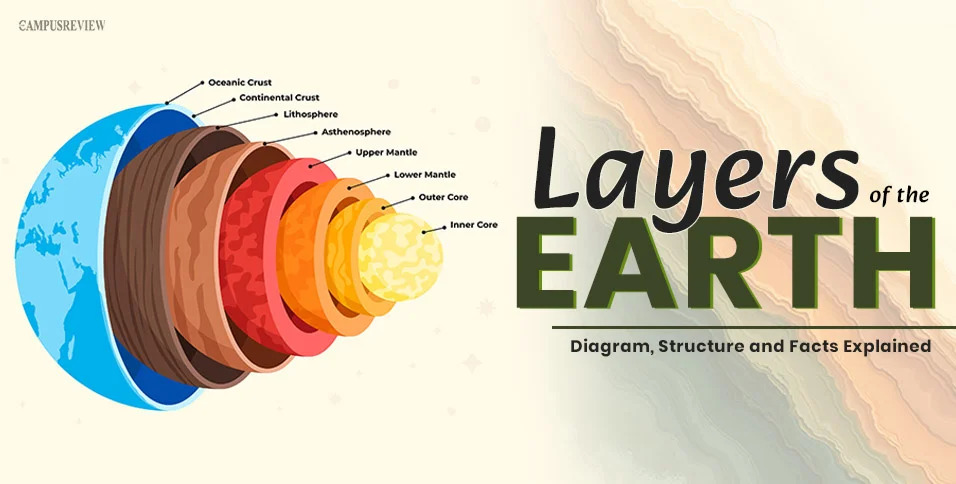
Understanding these differences helps explain seismic-wave behavior, plate tectonics, and Earth's internal heat transfer.
The Campus Review's guide provides a visual introduction to the four layers and their key characteristics.
https://thecampusreview.com/stem/layers-of-the-earth


 Locked