The
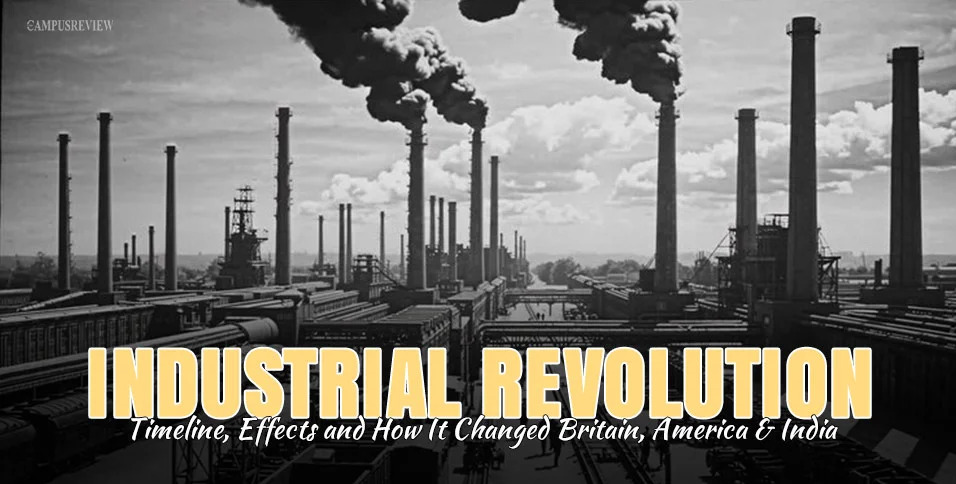
Industrial Revolution was one of the most important turning points in modern history. Beginning in 18th-century Britain, it shifted production from traditional handcraft methods towards mechanised factories.
Several factors contributed to this transformation, including agricultural improvements, coal and iron resources, expanding trade, technological inventions and capital investment.
Some major inventions changed the pace of industrial development:
Spinning Jenny: Increased the amount of yarn that could be spun.
Water Frame: Used water power to operate spinning machinery.
Steam Engine: Supported factory production and transportation.
Power Loom: Mechanised weaving.
Assembly Line: Helped make mass production more efficient.
Industrialisation later developed through electricity, electronics, computers, robotics and artificial intelligence.
However, its effects were mixed. It supported economic growth and technological progress while also contributing to pollution, difficult working conditions and social inequality.
How do you think the latest wave of industrial change, particularly AI and automation, compares with the original Industrial Revolution?
Explore the complete guide:
https://thecampusreview.com/history-and-culture/industrial-revolution/


 Locked