Universities have existed in different forms for more than a thousand years.
Long before today's digital classrooms and international university rankings, scholars gathered in important centers of learning to study law, religion, medicine, philosophy, mathematics, and science.
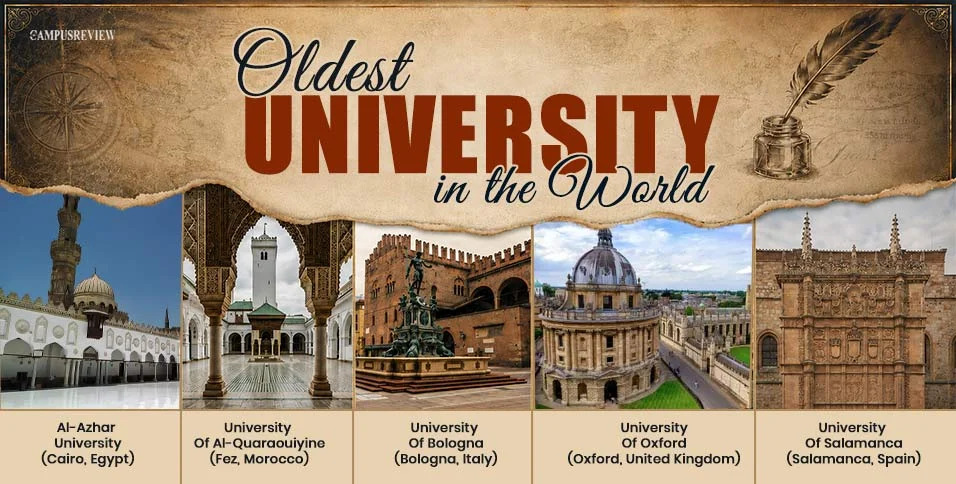
🏛️ Al-Qarawiyyin: A Historic Beginning
The
University of Al-Qarawiyyin in Fez, Morocco, is traditionally dated to 859 CE.
Founded by Fatima al-Fihri, it developed from a mosque and learning center into an important institution of scholarship.
Its history makes it one of the most frequently cited candidates for the title of the world's oldest continuously operating higher-education institution.
🌍 Other Historic Universities
The list also includes:
Al-Azhar — Egypt — 970
Bologna — Italy — 1088
Oxford — UK — 1096
Salamanca — Spain — 1134
University of Paris — France — 1150
Cambridge — UK — 1209
Padua — Italy — 1222
Naples Federico II — Italy — 1224
Siena — Italy — 1240
🎓 What Did These Institutions Teach?
Historic centers of learning contributed to disciplines such as:
Law • Theology • Medicine • Philosophy • Mathematics • Astronomy • Science • Literature
Over centuries, these traditions evolved into modern university systems.
🌎 Why Study University History?
Understanding the history of universities helps explain how formal education developed across different civilizations.
It also highlights how institutions can survive major social and political changes while continuing to adapt.
👉 Explore the full list:
https://thecampusreview.com/history-and-culture/oldest-university-in-the-world/#UniversityHistory #OldestUniversities #Education #HigherEducation #History


 Locked