Human evolution describes the gradual development of modern humans from earlier ancestors over millions of years.
A simplified educational timeline often highlights seven groups:
Dryopithecus
Ramapithecus
Australopithecus
Homo habilis
Homo erectus
Neanderthals
Homo sapiens
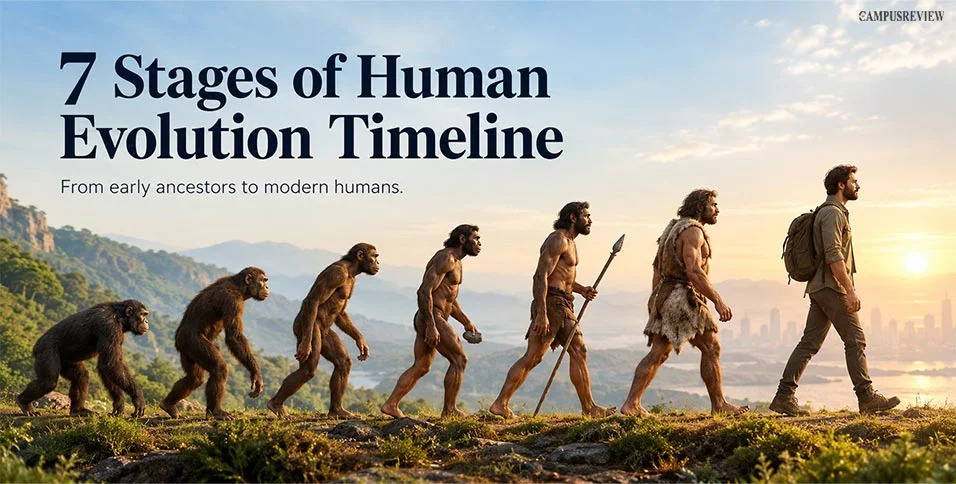
Each group helps explain different aspects of evolutionary history, including changes in body structure, upright walking, brain development, toolmaking, and adaptation to different environments.
Fossils, archaeological discoveries, and genetic evidence help scientists reconstruct this history. However, these seven groups should not be treated as a direct chain of ancestors because human evolution involved many branching lineages.
Read more:
https://thecampusreview.com/stem/7-stages-of-human-evolution/Discussion question: Which discovery do you think contributed most to our understanding of human evolution: Lucy's skeleton, early stone tools, or Neanderthal DNA?


 Locked