The
Cat’s Head Nebula is an interesting example of how natural structures in space can resemble familiar objects.
Located within the Carina Nebula, approximately 7,500 light-years from Earth, this dusty formation has a shape that looks like a cat turning its head.
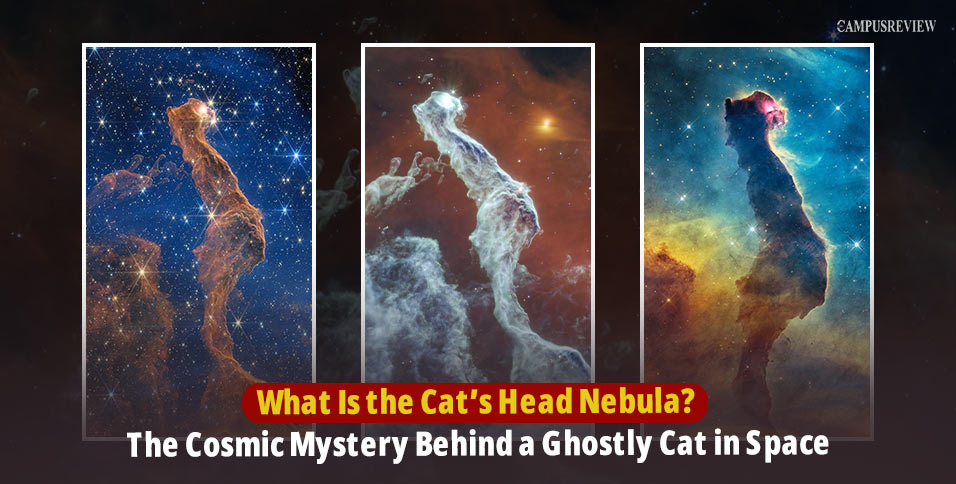
Astronomers use observations from Hubble and the James Webb Space Telescope to study its structure. These telescopes observe different wavelengths, allowing researchers to examine visible features and details hidden within cosmic dust.
The formation is influenced by ultraviolet radiation and stellar winds from nearby massive stars. Over time, these forces can erode the surrounding material.
Questions for discussion:
Why do people recognise familiar shapes in astronomical images?
How do infrared observations help astronomers study dusty regions?
What can nebulae teach us about the formation and evolution of stars?
For a detailed introduction, read the article from The Campus Review:
https://thecampusreview.com/news/ghostly-cat-in-space/


 Locked