The answer depends partly on how historians define civilization.
Sumer in southern Mesopotamia is frequently identified as the earliest known urban civilization. By the fourth millennium BCE, cities such as Uruk had become major urban centers, while cuneiform developed as a system of writing and record keeping.
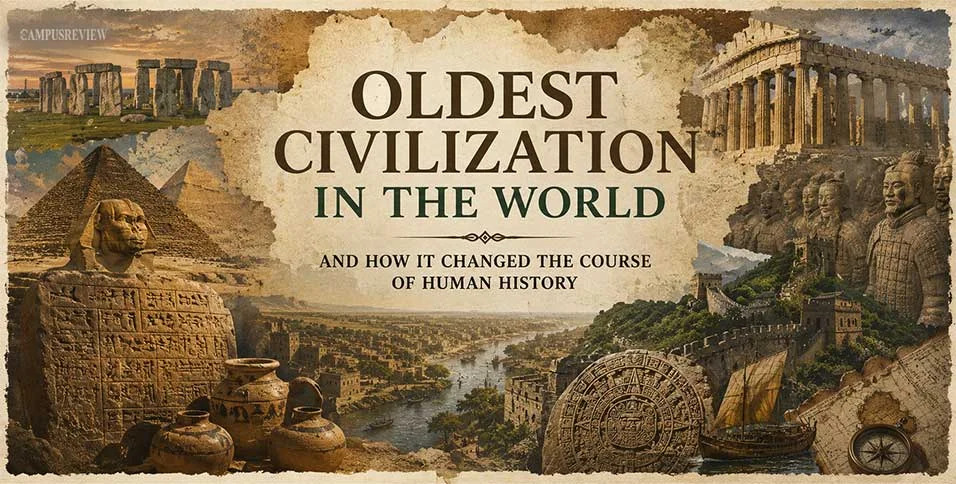
However, there were other early centers of complex society.
Major Early Civilizations
Sumer / Mesopotamia — Early cities, cuneiform, irrigation and administration.
Ancient Egypt — Centralized rule, hieroglyphs, monumental architecture and Nile-based agriculture.
Indus Valley Civilization — Planned cities, standardized bricks and sophisticated drainage.
Caral-Supe — Early monumental architecture and urban centers in coastal Peru.
Ancient China — Bronze technology, early writing and long cultural continuity.
Olmec Civilization — Monumental stone sculpture and influential Mesoamerican traditions.
So rather than viewing civilization as a single invention, it is useful to understand it as a process that occurred independently in several regions.
👉 Read more:
Oldest Civilization in the World — The Campus Review#History #AncientHistory #Civilization #Mesopotamia #WorldHistory


 Locked