Human evolution is a complex scientific subject involving fossils, genetics, archaeology, and environmental adaptation.
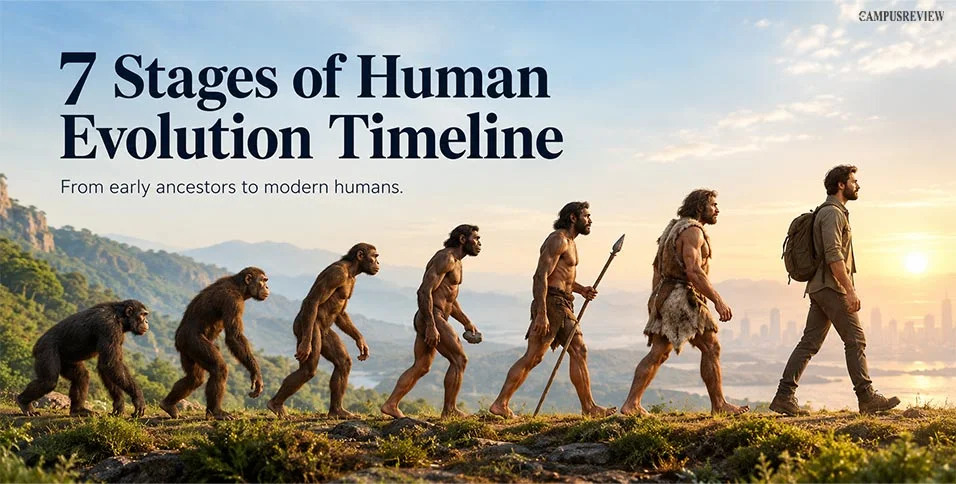
A simplified educational timeline often introduces seven species:
Dryopithecus
Ramapithecus
Australopithecus
Homo habilis
Homo erectus
Neanderthals
Homo sapiens
These species help introduce important topics such as bipedalism, brain development, toolmaking, migration, and the emergence of modern human behaviour.
However, the timeline should not be interpreted as a straight sequence. Human evolution involved multiple branches, and some species lived during overlapping periods. Ramapithecus, in particular, is no longer regarded as a direct human ancestor.
The Campus Review has published a guide explaining these seven species and their evolutionary significance:
https://thecampusreview.com/stem/7-stages-of-human-evolution/Discussion question: Which discovery do you think has contributed most to our understanding of human evolution: fossils, stone tools, or genetic evidence?


 Locked