Human evolution is a complex process that took place over millions of years. Fossil discoveries and archaeological evidence help scientists understand how different human relatives lived and how modern humans eventually emerged.
Some important groups commonly discussed in simplified evolutionary timelines include Australopithecus, Homo habilis, Homo erectus, Neanderthals, and Homo sapiens. Earlier apes such as Dryopithecus and the historically significant Ramapithecus are also discussed in the broader context of primate evolution.
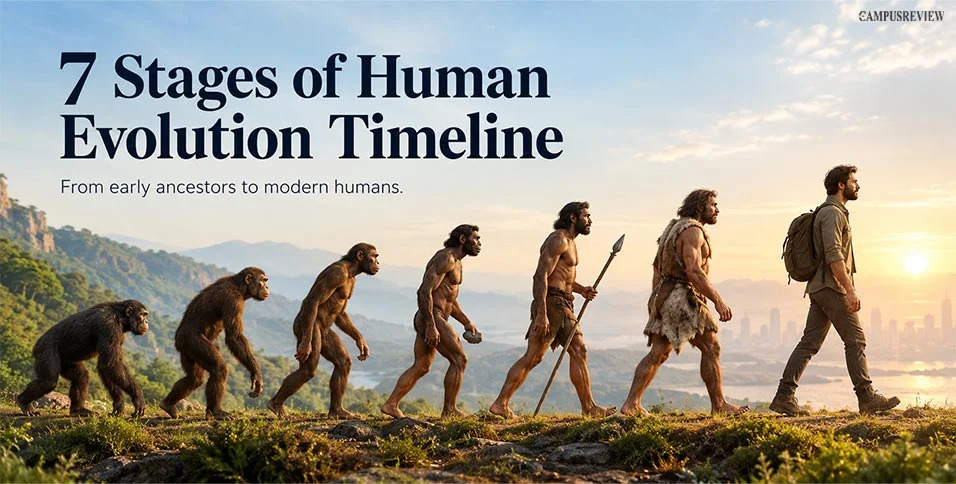
Several major developments shaped this history:
Bipedalism: Walking on two legs became an important adaptation.
Brain development: Changes in brain structure supported increasingly complex behaviours.
Toolmaking: Stone tools helped early humans process food and perform other tasks.
Fire use: Fire provided warmth, protection, and opportunities for cooking.
Migration: Different human groups spread into new environments.
Communication and culture: Language, symbolic expression, and social cooperation became increasingly important.
It is also important to remember that human evolution was branching, not a straight sequence of species.
Discussion question: Which development do you think had the greatest impact on human evolution: walking upright, toolmaking, fire use, or language?
Explore the complete guide:
https://thecampusreview.com/stem/7-stages-of-human-evolution/


 Locked