Astronomers have identified 2026 ED138, an object orbiting beyond Pluto, using observations from the NSF–DOE Vera C. Rubin Observatory.
Initial estimates put its size between 600 and 1,500 kilometres. However, that range is broad, and further observations are needed before scientists can determine whether the object qualifies as a
dwarf planet.
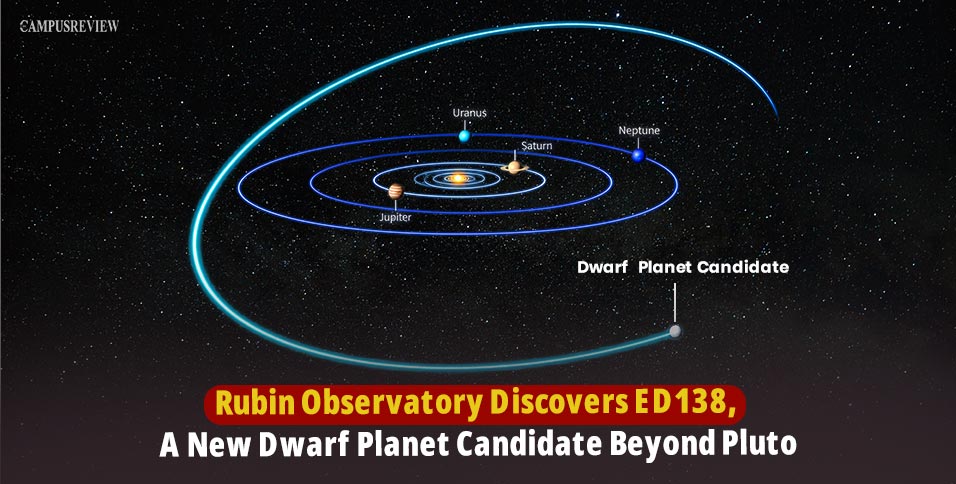
The discovery raises interesting questions about planetary science:
How do astronomers identify distant objects among background stars?
Why do researchers need repeated observations to establish an orbit?
What distinguishes a dwarf planet from other trans-Neptunian objects?
How can follow-up observations help constrain an object's size?
The Campus Review provides an accessible introduction to the discovery:
https://thecampusreview.com/news/new-dwarf-planet-candidate/Discussion question: What kinds of observations do you think would be most useful for determining whether this object is a dwarf planet?


 Locked