There is no single answer because “greatest” can mean different things.
A ruler may be considered influential because of military success, political reforms, administrative achievements, cultural influence or long-term impact.
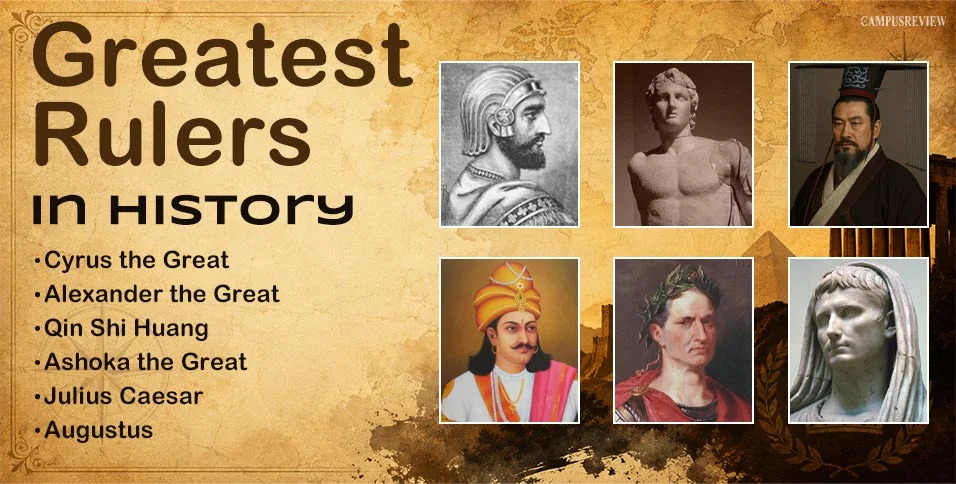
Some frequently discussed historical rulers include:
Alexander the Great — Expanded Macedonian power across a vast territory through a series of military campaigns.
Ashoka the Great — Mauryan emperor remembered for his transformation and promotion of Buddhism.
Julius Caesar — Played an important role in the political changes that ended the Roman Republic.
Genghis Khan — Founded the Mongol Empire and dramatically changed the political map of Eurasia.
Augustus — Established himself as Rome's first emperor and helped create a more stable imperial system.
Akbar the Great — Mughal ruler known for administration, expansion and cultural policies.
There are many other rulers who could be included depending on the criteria being used.
The interesting part of studying history is understanding why these rulers became influential and what consequences their decisions had for their societies.
📖 Explore the complete list:
https://thecampusreview.com/history-and-culture/greatest-rulers-in-history/#GreatestRulers #WorldHistory #HistoricalLeaders #AncientHistory #HistoryDiscussion #Civilizations #History


 Locked