Large forest regions are important not just because of their size, but also because of the ecological functions they support.
Forests provide habitats for wildlife, store carbon, influence water movement, protect soils, and support human communities. Their characteristics vary according to climate, rainfall, soil, and geographical location.
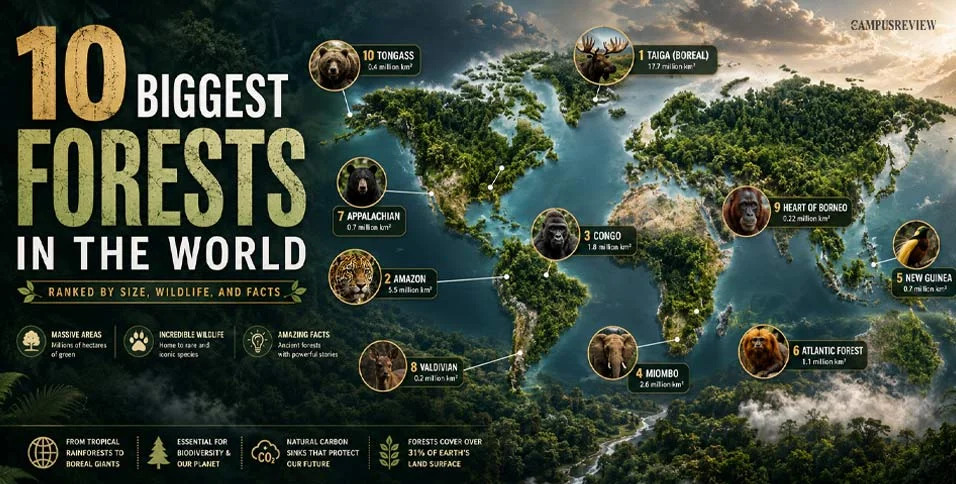
For example, tropical rainforests experience different conditions from boreal forests, which are found across colder northern regions. These differences influence vegetation, biodiversity, and the environmental pressures each ecosystem faces.
Some questions worth discussing:
How do tropical and boreal forests differ?
Why is biodiversity important for healthy forest ecosystems?
How can deforestation affect wildlife and local communities?
What approaches can support responsible forest management?
For an introductory overview of major forest regions, see The Campus Review's geography guide:
https://thecampusreview.com/geography/largest-forests-in-the-world/


 Locked